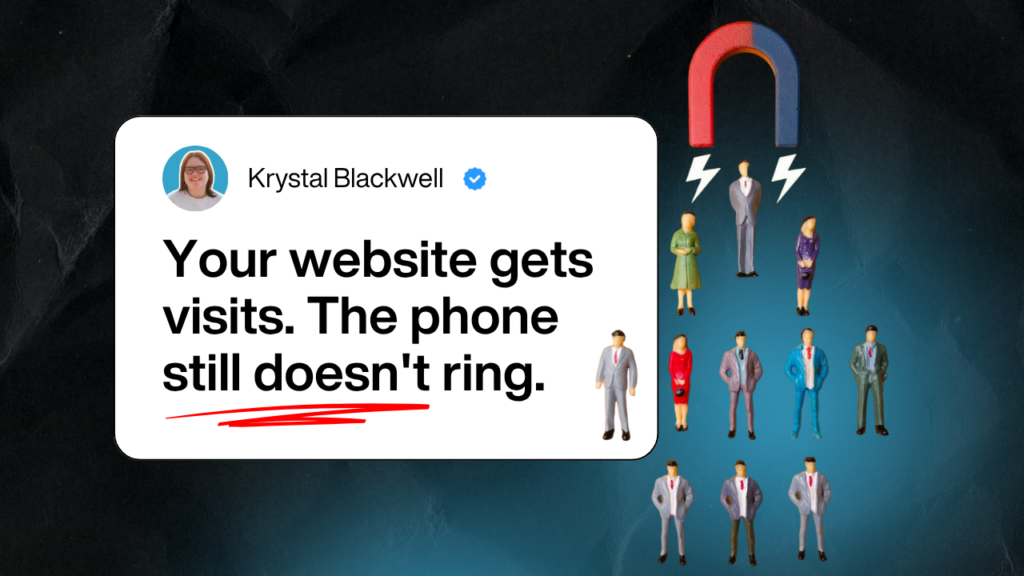


You built a firm people trust enough to recommend. That should feel like a strength, because it is.
The problem starts when the business grows but the way new work arrives stays exactly the same. That is usually the point when referrals are not enough for law firm growth on their own.
Look at where your last ten clients came from. If most of them trace back to the same handful of people, your firm may be busier than ever while still depending on a very small network.
Then ask the harder question. What happens the month your best introducer retires, gets busy, changes role or simply stops sending as much work?
By the end of this article, you will know how to check whether your firm has reached a referral ceiling. You will also know what to look at before spending money trying to fix it.
Key Takeaways
- How to tell the difference between a busy firm and a firm with a reliable route to growth
- Five signs your growth still depends heavily on a small network
- Why the answer is not to stop taking referrals
- The ten-client check to run before making another marketing decision
- What changes when your firm has another route to new clients
The Problem With Relying on Referrals Alone
Referrals are not the problem. Depending on them for nearly every new client is.
Most firms do not notice when one becomes the other because the business still feels healthy. Clients are happy, work keeps coming in and there is no obvious problem demanding attention.
The ceiling usually appears later, after the firm changes. You hire another fee earner, open another office, launch a new service or set a bigger growth target.
The business now needs more opportunities. The referral network is still the same size.
That is the point where the maths starts to become uncomfortable.
A pipeline that comfortably supported one team now has to support two. The business has grown, but the way new work arrives has not grown with it.
By the time the gap becomes obvious, the firm may already have been through several quiet months. Nothing dramatic happened, but growth has become harder to plan.
Five Signs Your Law Firm Has Hit a Referral Ceiling
1. Most New Work Comes From the Same Small Network
Write down where new clients actually come from and the list is often surprisingly short. The same introducers, the same long-standing clients and the same personal relationships appear again and again.
That may have worked well for years. It becomes a problem when the firm needs more work than that small network can reliably provide.
2. New Business Feels Unpredictable Month to Month
Some months are full. Other months leave you quietly wondering where the next good enquiry is coming from.
The issue is not that every month needs to look identical. The issue is that you cannot see a reliable pattern behind where new work comes from.
That makes hiring and growth decisions harder. You are making plans for a bigger firm while relying on a pipeline you cannot properly forecast.
Getting enquiries is only part of the picture. If enquiries are already arriving but too few become clients, read What Happened to Your Last 10 Genuine Enquiries?
3. You Are Still the Person Making New Relationships Happen
The founder or managing partner is still the main connector. You make the introductions, attend the events, keep the important relationships warm and remind people what the firm does.
That works when the firm is small. It becomes a limit when growth depends on what one person can personally carry.
At some point, the business needs to attract new clients without every relationship starting with you.
4. One Quiet Month Causes More Concern Than It Should
Every firm has quieter periods. The warning sign is when one slow month immediately creates genuine concern because there is nothing else running alongside referrals.
When one source slows down, the whole pipeline feels it. There is no other dependable route helping to balance things out.
5. People Outside Your Network Rarely Find the Firm
Think about your last few good clients who had never heard of you before. How many found the firm without someone else making the introduction?
People outside your network may struggle to find you, understand why you are relevant or feel confident enough to get in touch. The problem might be visibility, your message, your website, the way people move towards an enquiry or something else entirely.
The important point is not to guess. It is to find out where the gap actually sits.
None of these signs mean your firm is struggling. They mean growth currently depends heavily on something you do not fully control.
The Ceiling Often Appears After a Sensible Growth Decision
Here is what I see over and over again. The referral ceiling rarely appears when a firm is failing.
It appears after the owner makes a sensible decision to grow.
You hire another solicitor because the firm has momentum. You open another location because demand looks promising, or launch a service aimed at people outside your current network.
The decision itself makes sense. The problem is that the way you bring in work has not changed to support it.
That is why this problem is easy to delay. The firm is not in crisis, referrals are still producing something and there is always something more urgent to deal with.
Marketing gets pushed into next quarter. Then the quarter after that.
Meanwhile, the business keeps growing around a client pipeline that has not changed with it.
What Most Firms Get Wrong When They Try to Fix This
Most firms respond in one of two ways. Both can miss the real problem.
The first is to push harder on referrals. More networking, more coffee catch-ups and more asking clients or contacts to introduce someone.
That can produce more work. It does not change the fact that growth still depends on the same finite group of people remembering the firm at the right moment.
The second mistake is to buy a marketing tactic before checking what is actually wrong. That might mean a new website, SEO, Google Ads, a rebrand or more content.
Any of those could be useful. Any of them could also be the wrong answer.
The problem might be that the right people cannot find you. It might be that they find you but do not understand why you are the right fit.
It might be that people are visiting the website and leaving without taking the next step. It might even be that good enquiries are already arriving but are not being handled properly.
Spending money before mapping the problem is how firms end up with more activity and the same growth ceiling.
What Actually Works?
The answer is not to walk away from referrals. It is to build another route to good clients that works alongside them.
A second route means people who have never met you, never been introduced and never heard your name from a colleague can still discover the firm. They can understand why you are relevant and know what to do next.
That does not replace what referrals already do well. It means growth is not completely tied to how many introductions happen to arrive in a particular month.
The goal is simple. Keep the reputation and relationships that built the firm, while creating another way for the right people to find and choose you.
What This Looked Like for One Law Firm
One law firm we have worked with for more than 15 years grew from one office to five. Its early growth was built heavily on reputation and referrals.
Today, the firm also generates more than 50 website enquiries in an average month. People who have never been introduced can find the firm, understand the help available and make contact.
Referrals still matter. The difference is that new work no longer has to begin with someone already knowing the firm.
That is what a second route changes.
Run This Check Before You Spend Anything
Before paying for another rebuild, marketing campaign or agency, write down where your last ten new clients actually came from. Be specific.
You might use categories such as:
- referral
- existing client
- professional introducer
- website
- Google search
- advert
- social media
- other
Then look at the pattern.
If eight or nine clients trace back to the same small group of people, that tells you something important. Referrals are not failing, but very little else is currently helping the firm bring in new work.
Then ask one more question.
Could someone who has never met us find the firm today, understand why we are the right fit and know what to do next?
Do not assume the answer. Check.
How Do I Know Whether My Firm Has Hit This Ceiling?
Look at your last ten new clients. If almost all of them came from the same small group of people, the firm is highly dependent on that network.
Then compare that network with your growth plans. The bigger the gap between the work you need and the routes currently bringing it in, the closer the ceiling is.
The Bottom Line
A referral-led law firm can look completely healthy right up until the moment it tries to grow. The work is good, clients are happy and new instructions are still arriving.
The problem is that the business has grown while the way new work arrives has stayed the same.
That is not a reason to distrust referrals. It is a reason to build another route alongside them, so growth does not depend entirely on who happens to think of you this month.
Start with your last ten clients. Find the pattern and work out what is actually stopping another route from working before you spend money fixing the wrong thing.
Not sure whether referrals are the problem, or whether something else is getting in the way?
Take the four-minute Enquiry Gap Assessment. It will help you see what is worth checking first.