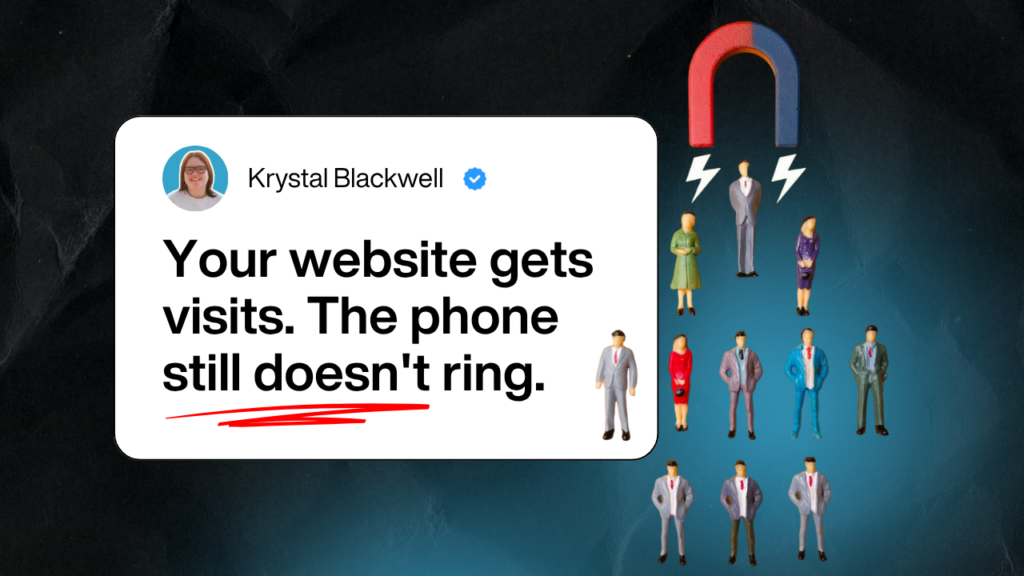


If Search Engine Optimisation (SEO) has felt like noise, it’s because most local SEO advice is written for marketers, not for people running a business. This guide keeps it practical: show up locally, look trustworthy fast, and turn clicks into enquiries without SEO turning into a second job.
This guide is for busy law firm partners and professional service owners who want straight answers and a local presence that quietly brings enquiries.
Why Local SEO often fails (and how to make it work)
Local SEO usually fails for one boring reason: it gets treated like a marketing task instead of a trust system.
So you end up with “activity”:
you post once on Google, you tweak a title tag, you publish a blog, you buy a directory listing. Then nothing really changes, so it gets dropped.
The firms that win locally don’t do more. They do a few things properly, then keep doing them consistently. They focus on:
- being relevant for the right searches
- looking credible enough to click
- making the next step obvious once someone lands
That’s what drives enquiries.
What Google looks for in local results (and why you can compete)
Google’s local results are mostly built around three ideas: relevance, distance, and prominence. You can’t control distance. But you can absolutely control relevance and prominence, and that’s where the wins are.
Relevance is about whether your website and Google Business Profile clearly match what the person is searching for.
Prominence is trust. Reviews, mentions, links, and whether your firm looks like a safe bet.
If you only improve one thing after reading this guide, improve how safe your firm feels online. Local SEO rewards the obvious choice.
Step 1: Get your Google Business Profile right
Your Google Business Profile is not optional. For many local searches, it is the main event. It’s often the first impression, especially on mobile.
Start with the basics and get them tidy:
Your business name should be your real business name. No keyword stuffing. No “Legal Services Derby” nonsense.
Your primary category should match your main service. Then add secondary categories where they genuinely apply.
Your description should be written for humans. Say what you do, who you help, and where you help them. Mention locations naturally, not like you’re trying to trick Google.
Then make it feel alive. Add photos of the office, the team, the signage. Keep your hours accurate. Add services properly. Respond to reviews.
Finally, make sure your Name, Address, and Phone are consistent everywhere. If those details vary across directories, you look messy. Google notices. So do clients.
Step 2: Build pages that speak to local clients
If you want to rank for “immigration solicitor in Nottingham”, you need a page that actually deserves to rank for that.
Not a generic “Services” page.
Not a page where you’ve swapped the town name ten times and hoped for the best.
A strong local page is simple. It focuses on one service, in one location, and it answers the questions people in that area are already worried about.
It should make three things clear:
- This is for someone like me
- This firm knows what they’re doing
- I know what to do next
If your local pages don’t do that, they’ll struggle to convert even if they rank.
Step 3: Stop “getting reviews” and build a review system
Reviews are one of the biggest local ranking and conversion levers, but most firms handle them like this:
- “Let’s ask a few people this month.”
- Then everyone gets busy.
- Then it stops.
You want reviews to happen as part of your normal process. The easiest way is to attach it to a moment that already exists, like case closure, a successful outcome, or the “handover” stage.
Keep the request short. Make the link easy to click. Don’t overthink it.
Then respond to reviews. Even a simple reply makes your firm look active and professional. And when a review is awkward, the response matters more than the review itself.
Step 4: Publish what clients are actually searching for
Clients are not searching for “thought leadership”. They’re searching for answers before they pick up the phone.
That usually means costs, timelines, and what happens next.
So instead of trying to publish loads, publish the right things. The kind of questions you hear weekly:
- “How much does conveyancing cost in Derby?”
- “Do I need a solicitor for unfair dismissal?”
- “What happens in a child arrangement hearing?”
This content does two jobs:
- it brings the right traffic
- it pre-sells trust before the enquiry
And it filters out tyre-kickers, because you’re being clear upfront.
Step 5: Fix the website basics that silently kill enquiries
Technical SEO doesn’t need to be a big drama. But your foundations have to work.
Your pages should load quickly, especially on mobile. Your forms should work. Your site should feel calm to use, not fiddly.
You also want each page to have a clear title and description, because that’s what people see in search results. If your listing looks vague, you get fewer clicks, even if you rank.
Here’s the only checklist you need in this whole guide:
- mobile experience feels easy
- page loads fast enough that people do not bounce
- contact buttons are obvious and CTA-driven
- forms work (and you actually receive the submissions)
- the site is secure (HTTPS)
Do these before you spend time on anything fancy.
Step 6: Earn links and mentions that make sense locally
You don’t need hundreds of backlinks. You need a handful of relevant, trusted mentions.
Local SEO links that work tend to come from obvious places:
- legal and professional directories that clients actually use
- local organisations, charities, sponsorships
- partnerships with related businesses (estate agents, accountants, consultants)
- local press when you have something worth saying
If a link makes sense to a human, it usually makes sense to Google.
Step 7: Measure what matters (and ignore the rest)
If your SEO reporting does not show enquiries, it’s not a business tool. It’s decoration.
Track what you actually care about:
- How many enquiries came in.
- Which pages people visited before they enquired.
- Whether your Google Business Profile generated calls.
- Whether the enquiries are the type you want.
You can keep this simple using Search Console, Google Business Profile insights, and Google Analytics 4. The point is not to obsess. The point is to stay in control.
A good rhythm is a quick weekly check-in, and one proper monthly improvement. Consistency beats intensity every time.
Real examples that this works
Fountain Solicitors went from virtually invisible online to ranking for 1,134 organic keywords, attracting 6,000+ monthly visitors, and generating 60+ enquiries per month. That growth supported expansion from a single office to five offices.
Onyx Solicitors grew organic keyword rankings from 112 to 630, with paid search performance strong enough that they paused campaigns because they couldn’t keep up with enquiries.
Different firms, same pattern: clear pages, strong trust signals, and tracking that links effort to outcomes.
Final word: make your site work harder than you do
Local SEO is not marketing theatre. It’s being:
- findable when someone needs you
- credible enough to choose
- easy to contact
Start with your Google Business Profile and your core pages. Fix the basics. Build a review system. Publish answers clients actually search for. Then keep it ticking over.
SEO gets people to your website. What happens when they arrive is a different problem entirely. If you want to know whether your website is converting the traffic it already gets, book a More Clients From Your Website Call.