Is AEO another thing your firm needs to pay for? And if people now get answers without clicking, is your website still doing its job?
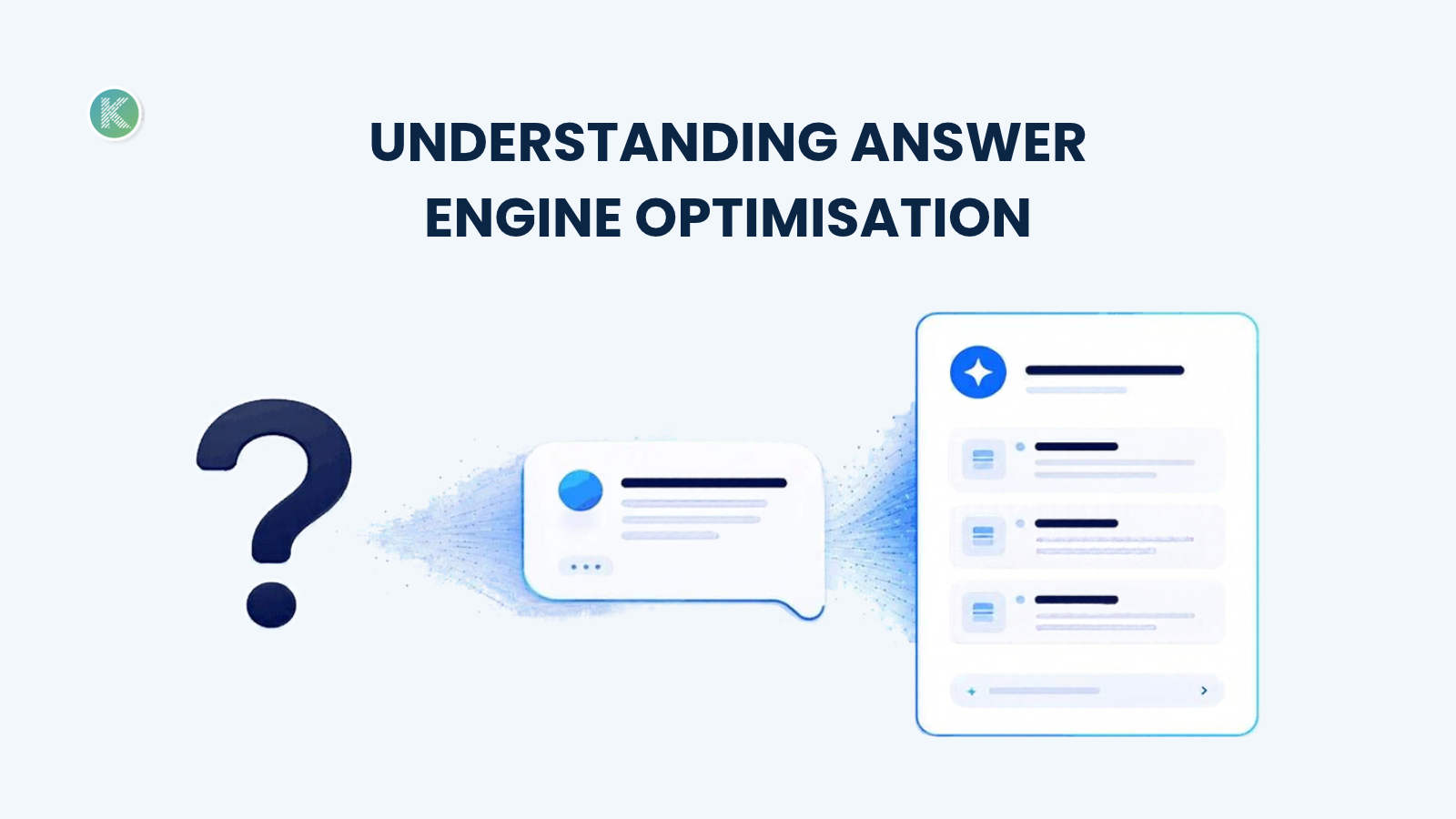
AEO stands for answer engine optimisation. It means shaping your content so that tools which give direct answers can use it. That includes Google’s featured snippets, voice assistants, Google’s AI Overviews and chat tools like ChatGPT.
By the end of this article, you’ll know how AEO compares with SEO, where each one matters, and which to work on first. We’ll look at what each involves, where each is strong, where each falls short, and the honest recommendation for an established firm.
Key takeaways
- AEO is about being the answer. SEO is about being found and chosen.
- They overlap heavily. Most AEO work is simply well-written SEO.
- AEO matters most for early questions, like “what does a commercial lease review cost?”
- SEO still does the heavy lifting for searches where people are ready to hire.
- For most firms, the right order is SEO foundations first, then answer-style content.
In this article
- What AEO and SEO actually involve
- Where AEO is strong
- Where SEO is strong
- Where each falls short
- Which is right for your firm
- What an answer-ready page looks like
- The honest recommendation
- Questions
What AEO and SEO actually involve
SEO (search engine optimisation) is the work of getting the right pages in front of the right searchers. It covers your site’s technical health, your service and location pages, the words people search for, and your reputation online.
AEO (answer engine optimisation) narrows that down to one goal: being the answer an engine gives. That might be the box at the top of Google, the summary in an AI Overview, or the reply a voice assistant reads out.
AEO is not new. It grew out of the work people did for featured snippets and voice search. AI answers have simply made it more visible. You can see how AEO sits next to GEO and AIO in our guide to SEO, GEO, AEO and AIO.
Where AEO is strong
AEO is at its best on clear questions with clear answers. Questions like:
- “How long does a probate application take?”
- “Do I need an accountant to file a self-assessment?”
- “What is a shareholders’ agreement?”
When your page answers a question like that in two or three plain sentences near the top, it has a better chance of being shown as the answer. That puts your firm’s name in front of someone at the very start of their search.
AEO also improves your pages for people. Visitors want the answer fast, without scrolling past an introduction about your firm’s history.
Where SEO is strong
SEO is at its best when someone is ready to choose a firm. Searches like “commercial solicitor Derby” or “accountant for dentists” don’t want a one-line answer. They want a list of firms to compare.
Those searches lead to service pages, location pages, reviews and your Google Business Profile. That’s where enquiries come from.
SEO also covers the parts AEO depends on. If Google can’t crawl your site, or your pages are slow or thin, no answer engine built on Google can use them. Google says there are no extra technical requirements to appear in its AI answers. A page just needs to be indexed and eligible to show in normal search.
Where each falls short
AEO falls short when the question has no simple answer. “Which solicitor should I use?” isn’t something an answer box can settle. It also has a real downside. If the answer is complete on Google’s page, some people won’t click through to you at all.
SEO falls short when it’s measured only by rankings and traffic. In our own Search Console reviews, we’ve seen articles bring in thousands of views from people who were never going to hire anyone. Lots of traffic, few enquiries. That’s an SEO problem AEO can’t fix either.
So neither is enough on its own. The question is which to start with.
Which is right for your firm
Here’s a simple way to decide.
| Your situation | Start with |
|---|---|
| Your service pages don’t show in Google at all | SEO |
| Your site has technical problems or old, thin pages | SEO |
| You rank, but visitors don’t get in touch | Your website’s message and next step |
| Your pages rank well and you want to be seen earlier in the buyer’s search | AEO |
| Clients keep asking the same questions on calls | AEO, by writing those answers up |
That last row is the best place to start with AEO. The questions your clients ask on calls are the questions they ask Google and AI tools first. Writing them up well is AEO in its most useful form.
What an answer-ready page looks like
Most firm websites bury the answer. Here’s the same page written two ways.
Before: “We have over 20 years of experience in property law. Our friendly team understands that every client is different. We offer a range of services to help you with your lease, and we’d love to hear from you.”
After: “A commercial lease review usually takes 3 to 5 working days once we have the draft lease. We check the rent, the length, the break clauses and your repair duties, then explain anything that could cost you later. Fixed fees start from [PRICE].”
The second version answers the question in the first sentence. It gives real detail, and it tells the reader what happens next. An answer engine can lift it as it stands. A person can decide in ten seconds whether to read on.
(This is an example of the writing style only. The timings and fee are placeholders, not advice.)
You don’t need to rewrite your whole site to do this. Start with the pages that answer your clients’ most common questions. Put a two or three sentence answer right under the heading. Then add the detail, the examples and the “what happens next” underneath.
One more habit helps. Use the question itself as the heading, written the way a client would say it. “How long does a lease review take?” works better than “Our process”.
The honest recommendation
For an established professional firm, treat AEO as a way of writing, not a separate service.
Get your SEO foundations right first: a site Google can read, with clear service pages behind it. Then build a library of short, direct answers to the questions your clients actually ask. Put the answer first, then the detail.
That’s how you show up at the start of a buyer’s search and again when they’re ready to choose. It’s also how you avoid paying twice for the same work under two names.
If you’re wondering whether a separate agency is needed for this, the short answer is usually no. Ask any agency how AEO changes what they’d do, and how they’d measure it in enquiries rather than “answer share”.
Closing
AEO and SEO aren’t rivals. SEO gets the right pages found. AEO makes sure those pages give clear answers people and machines can use.
For most established firms, the order matters more than the label. Fix the foundations, then write up the questions your clients already ask you.
If you’d like to see where your website might be losing enquiries before you spend on anything new, book a More Clients Call. It’s 25 minutes, and we look at your website together.