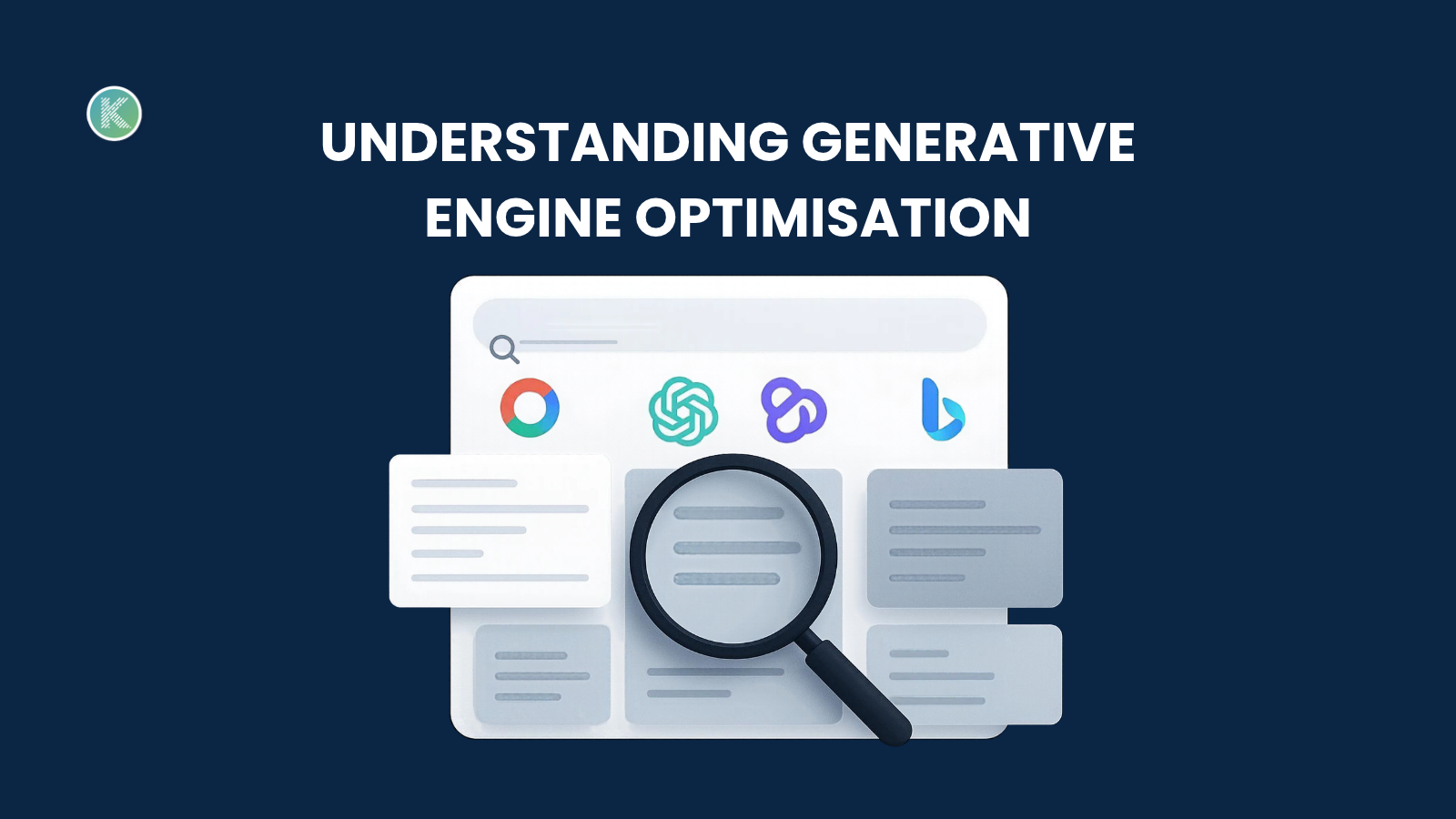
Has someone told you your firm needs “GEO” now? And are you wondering whether the SEO you’ve paid for is suddenly out of date?
You’re not alone. In the last year, people have started asking ChatGPT, Gemini and Google’s AI answers the same questions they used to type into a search box. So a new name appeared for getting your firm mentioned in those answers: GEO, or generative engine optimisation.
By the end of this article, you’ll know what GEO actually means, which parts of it are worth your time, and which parts are a new label on old work. We’ll cover where the term came from, what it asks you to do, where it’s overhyped, and what to check before you pay anyone for it.
Key takeaways
- GEO means making your firm easy for AI tools to understand and mention in their answers.
- Most of what makes GEO work is the same as good SEO: clear answers on a site Google can read.
- Google says there are no extra technical steps needed to appear in its AI answers.
- A few habits do help more in AI answers, like plain answers near the top of a page and specific facts.
- Be wary of anyone selling GEO as a separate, urgent service.
In this article
- Where the term GEO came from
- What GEO asks you to do
- Where GEO helps
- Where GEO is overhyped
- What to check before paying for it
- The honest verdict
- Questions
Where the term GEO came from
GEO started as a research idea, not a sales pitch. A team of researchers from Princeton, IIT Delhi, Georgia Tech and the Allen Institute for AI published a paper called “GEO: Generative Engine Optimization” in November 2023.
They tested how small changes to web pages affected whether an AI tool quoted them in its answers. Adding clear statistics, citing trusted sources and including quotes from named experts all made pages more likely to be used. In their tests, visibility in AI answers rose by up to 40%. That’s their result, measured on their test set, not a promise for your firm.
Since then, “GEO” has become a marketing term. Some agencies use it to mean good content work. Others use it to sell something new and expensive.
What GEO asks you to do
At its core, GEO asks you to make your website easy for an AI tool to trust and quote. In practice, that comes down to a short list:
- Answer the question plainly, early on. AI tools pull short, clear answers. A page that waffles for three paragraphs before answering is harder to use.
- Be specific. Real numbers, real timeframes and real examples beat general claims.
- Show who you are. Named people, real reviews and a consistent business name and address across the web help AI tools trust that you exist.
- Keep your site readable. If Google can’t crawl a page, AI answers built on Google can’t use it either.
If that list looks familiar, it should. It’s most of what good SEO has asked for all along. You can read how the different terms fit together in our guide to SEO, GEO, AEO and AIO.
Where GEO helps
GEO is useful as a reminder of who’s reading your website now. It isn’t only people. It’s also the tools people ask for advice.
For a professional firm, that matters most in the early stage of a buyer’s search. Someone might ask an AI tool “do I need a solicitor for a commercial lease?” before they ever search for a firm. If your website answers that question clearly, you have a better chance of being part of the answer.
It also pushes firms to fix things they should have fixed anyway. Thin service pages and vague “about us” pages hurt you with people and with AI tools.
In our experience, firms who write clear answers to the questions their clients actually ask on calls get more out of this than firms chasing new tactics.
Where GEO is overhyped
Here’s the part that often gets left out.
Google says plainly that there are no additional requirements to appear in AI Overviews or AI Mode. A page needs to be indexed and eligible to show in normal search. Google also says you don’t need special AI files or special markup.
So when someone sells GEO as a separate technical service, ask what they’ll do that good SEO wouldn’t. Common warning signs:
- Promises that your firm will be “recommended by ChatGPT” by a set date. Nobody controls what an AI tool says.
- Reports full of “AI visibility scores” with no link to enquiries.
- A new monthly fee for work that’s already part of your SEO.
There’s also a measurement problem. Clicks from Google’s AI answers are counted inside your normal Search Console figures, not shown separately. In our own Search Console, we’ve seen searches showing an average position of 1 with no clicks at all. That usually means a special result, like a map or an AI answer, is being counted. So be careful with anyone who reports GEO “rankings” as if they’re precise.
What to check before paying for GEO
If you’re thinking about GEO, or an agency is offering it, ask these questions first:
- Can Google read and index all my important pages? If not, fix that first. It’s the foundation for everything else.
- Does each service page answer the main question near the top? What it costs and what happens next.
- Are my name, address and phone number the same everywhere? Your website, Google Business Profile and directories should match.
- Do I have real reviews and real examples? AI tools, like people, trust specifics.
- How will we know it’s working? The answer should be enquiries, not a new score.
If the answers to the first four are already yes, you’re doing most of GEO already.
As one example of why the basics matter: a UK video production agency came to us after a rebuild by another developer wiped out its rankings. Fixing the foundations took its ranking keywords from 1,248 to 2,090 by September 2025, and organic search now brings in 5 to 15+ enquiries a month. That work was SEO. It’s also exactly the base any AI answer needs.
The honest verdict
GEO is a useful name for an old truth: make your website the clearest, most useful answer to your buyer’s questions.
It isn’t a separate service most professional firms need to buy. If your SEO is done well, it already covers the parts of GEO that matter. If your SEO isn’t done well, GEO won’t save it.
Where GEO does deserve attention is in how you write. Short, direct answers. Specific facts. Real names and reviews. Those habits help people and AI tools at the same time.
If you’d like to see whether AI tools mention your firm today, our guide to checking it yourself is coming soon.
Closing
GEO is a new name, not a new rulebook. The firms that do well in AI answers are the ones whose websites already answer real questions clearly.
So before you spend on anything new, check the basics. Can Google read your site? And can a visitor quickly see why you’re the right choice?
If you’d like a second pair of eyes on where your website might be losing enquiries, watch the free video.