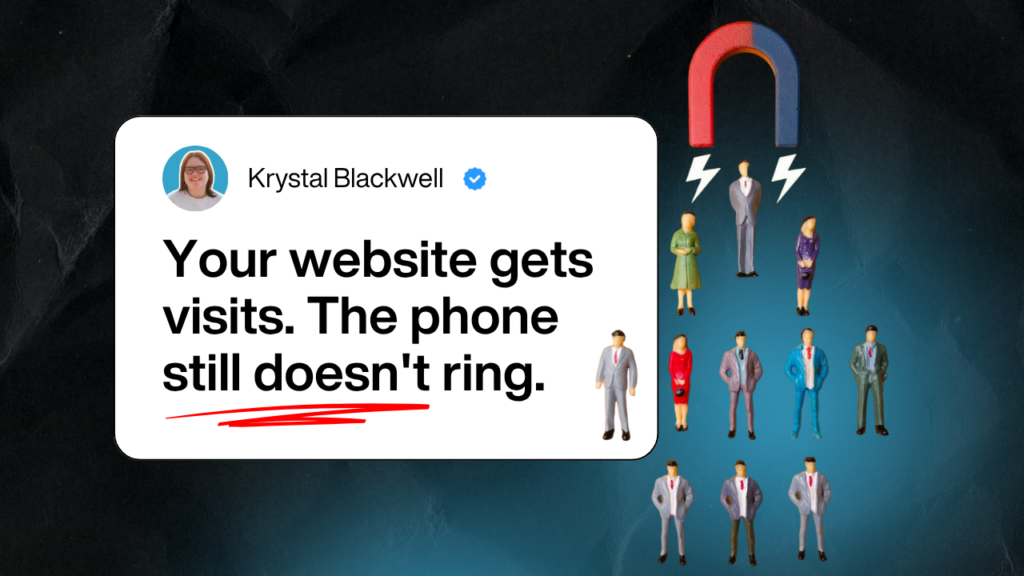
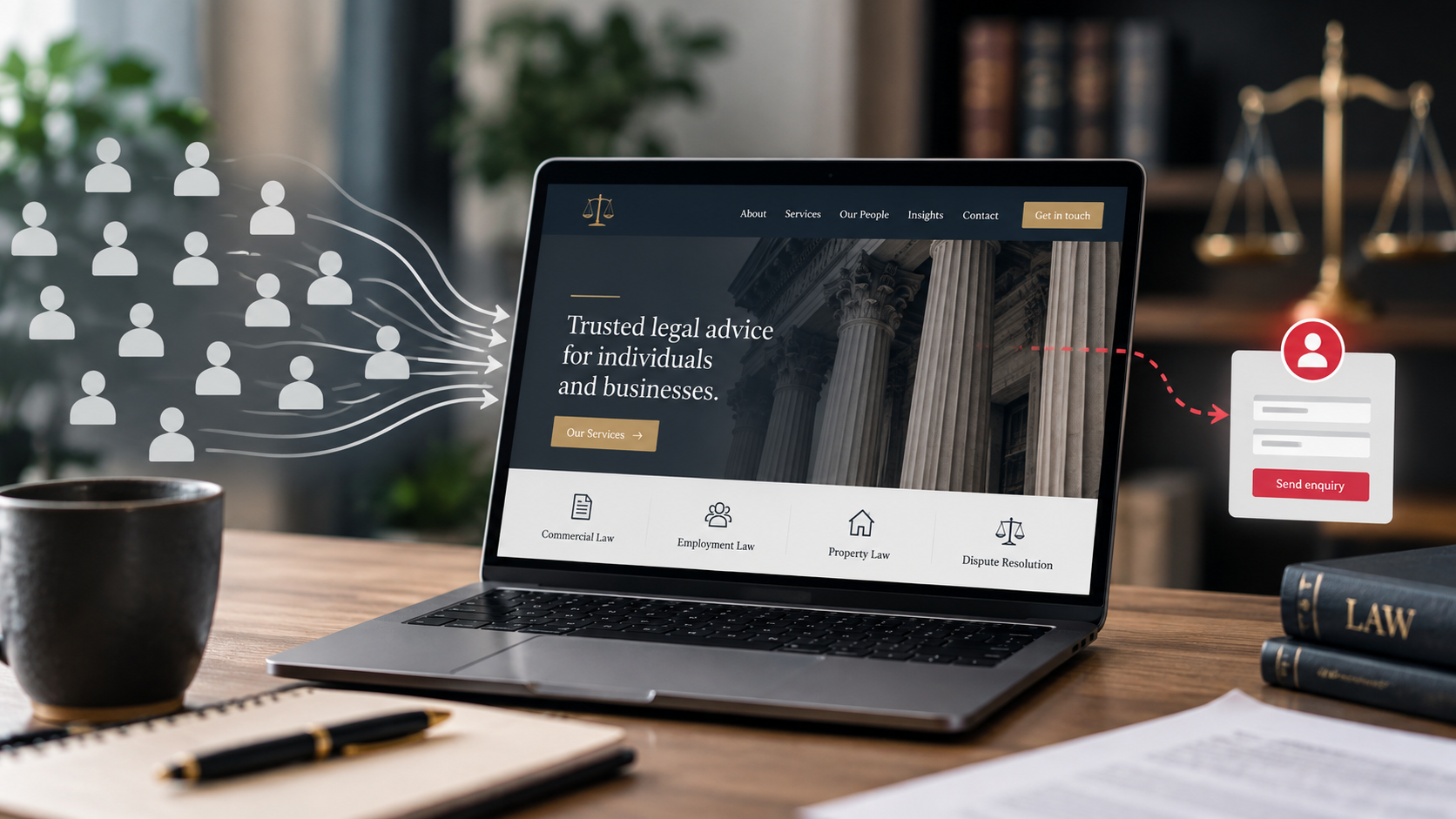
You paid for the site. It looks smart, the photos are good, and everything you asked for is on there.
The enquiries are another matter. A trickle, mostly from people who already knew the firm.
If you’ve paid for a law firm website before and been disappointed, you’re not asking what to add next. You’re asking a harder question. What was wrong with the last one? And how do you avoid paying for the same thing twice?
Here’s the short answer. Most sites are built to look right, not to help a stranger decide. Those are different jobs, and nobody tells you that before the invoice arrives.
By the end, you’ll be able to run through ten specific reasons enquiries stall, and check your own site against each one. You’ll also know which of them are worth fixing first.
I’ve grouped the ten into four parts. What your pages say, how easy it is to act, whether people believe you, and what happens after someone gets in touch.
Key takeaways
- A site can look expensive and still give a visitor no reason to contact you.
- Ten common faults cause most of it, and they sit in four places.
- Not all ten cost you the same. Fix the ones between interest and enquiry first.
- Sending more traffic to a page that doesn’t convert makes the problem more expensive, not smaller.
- You can check most of this yourself in an afternoon.
Contents
- Why a smart-looking site still doesn’t bring in enquiries
- Reasons 1 to 3: what your pages say
- Reasons 4 to 6: how easy it is to act
- Reasons 7 and 8: whether people believe you
- Reasons 9 and 10: what happens after the enquiry
- Which ones are costing you most
Why a Smart-Looking Site Still Doesn’t Bring In Enquiries
So how does a site that everyone approved of end up producing so little?
Think about how the project ran. You were shown layouts, colours and images. You gave feedback on those. Nobody sat with you and asked what a worried client needs to read before they pick up the phone.
That’s not always the designer being lazy. Design is what most web projects are sold on, because it’s the part a client can see and judge quickly.
A visitor isn’t judging your site the way you did. They have a problem and they’re nervous about cost. In seconds they’re deciding whether you handle this kind of thing, and whether you feel safe to contact.
Everything below is about that gap.
Reasons 1 to 3: What Your Pages Say
1. The page is built around the design, not the decision
The layout looks considered. The words were written last, to fill the boxes. That order usually shows.
Fix: Decide what each page has to say and who it says it to, then lay it out. Words first, design second.
2. The message sounds like every other firm
Experienced solicitors, personal service, practical advice. Nothing wrong with any of it, but every competitor says the same, so it doesn’t help anyone choose.
Fix: Write for the situation the reader is in. A business owner facing a contract dispute has different worries from someone sorting out a will.
3. There’s too much legal language
Words you use daily can be a wall to someone outside the profession. When people don’t understand, they don’t ask. They leave.
Fix: Read a service page aloud to someone outside the firm. Anything they ask you to explain is a rewrite.
Common Law Firm Website Mistakes That Stop Enquiries has more on the wording side of this.
Reasons 4 to 6: How Easy It Is to Act
4. People land in the wrong place
Someone searches for a family law solicitor, clicks, and arrives on a home page listing eight services. They have to work out where to go next. Many won’t bother.
Fix: Every search term should land on a page about that thing, with the next step on it.
5. The call to action is weak
“Learn more” asks for nothing. “Submit” tells the reader nothing about what happens next.
Fix: Say what they get. Ask a question about your case, book a 20-minute call, request a callback today. One clear action per page.
6. The enquiry route is harder than it needs to be
Long forms, required fields nobody needs, no phone number near the top, no WhatsApp or callback option for people who hate forms.
Fix: Ask for the least you need to reply properly. Name, contact detail, a line about the problem. You can get the rest on the call.
Reasons 7 and 8: Whether People Believe You
7. There’s nothing to show you’ve done this before
No reviews, no results, no client comments. The site claims experience but shows none, and a cautious buyer notices.
Fix: Put reviews and results next to the claims they support, not on a page nobody visits. A short client comment under a service description does more than a wall of testimonials.
8. The trust signals are hidden or out of date
Old awards, a Google rating buried in the footer, team photos from three staff members ago. Signals that were true once can work against you without anyone noticing.
Fix: Check what a stranger sees in the first screen of your home page and your busiest service page. Put your strongest, most current signals there.
Reasons 9 and 10: What Happens After the Enquiry
9. Enquiries go somewhere nobody owns
The form goes to an inbox. The inbox is checked when someone has time. A good enquiry sits unread on a Friday afternoon and is gone by Monday.
Fix: Give the enquiry an owner, a reply time and a backup person. This costs nothing and it protects everything you spent to get the enquiry.
10. Nobody follows up, and nobody can see what happened
Plenty of people don’t hire the first firm they contact. Without a second message, or any record of who enquired and what came of it, you’re guessing about what works.
Fix: One polite follow-up brings a surprising number of people back. Keep a simple record of enquiries, source and outcome, even if it’s a spreadsheet at first.
What Happened to Your Last 10 Genuine Enquiries? is a good exercise to run before you spend anything.
Which Ones Are Costing You Most
Ten faults is a lot to look at. So start where the money leaks fastest.
Faults 4 to 6 and 9 to 10 sit between interest and enquiry. Someone already wants to talk to you, and something in the way stops them. That’s the most expensive kind of loss, because you’ve already paid to get their attention.
Faults 1 to 3 matter next, because they decide whether the right people stay long enough to reach that point.
Faults 7 and 8 are usually the cheapest to fix. An afternoon of tidying trust signals can change how a page feels.
One test tells you a lot. Open your busiest service page on your phone, as a stranger would. Time how long it takes to see what the firm does, who it’s for and how to get in touch. If any of those takes more than a few seconds, you’ve found your first fix.
Client Results
Two examples from firms I’ve worked with.
A UK video production agency came to me after a previous developer’s rebuild. It had cost over £5,000 and wiped out the firm’s search rankings. We recovered the visibility and rebuilt the route to enquiry. Organic keywords went from 1,248 to 2,090, and the site settled into 5 to 15 organic enquiries a month. Its Google Ads ran alongside at £8.34 per conversion on about £625 a month.
A commercial law firm I work with ran a small Google Ads budget where 54 clicks led to 50 conversions, at £10.77 each. The firm paused the campaign because it had more enquiries than it could handle. Nothing clever happened there. The page matched what people searched for, and the next step was obvious.
Check Your Own Site in Two Minutes
The Enquiry Gap Assessment is six questions. You’ll get a score across Message, Decision Path and Follow-Up, plus the first area I’d fix.
Take the Enquiry Gap Assessment
Final Thoughts
A site that looks good and produces nothing isn’t a design failure. It’s a site that was never asked to do the job you needed.
The ten reasons above are the ones I see over and over. Most firms have two or three, not all ten, and the fixes are usually smaller than people expect.
Start with the gap between interest and enquiry, because that’s where you lose people you already paid to reach. Then work back to what the pages say.
If you’d rather not guess which of the ten is yours, take the Enquiry Gap Assessment. Six questions, about two minutes, and you’ll see which part to look at first.