
Most professional service firms don’t lose opportunities because their website is bad. They lose them because they wait too long to fix it.
A proposal sits in the inbox. Partners say they’ll revisit it next quarter. Another six months pass, and the site that should be generating clients remains little more than an online brochure.
Meanwhile, competitors build visibility, publish client stories, and quietly dominate the market.
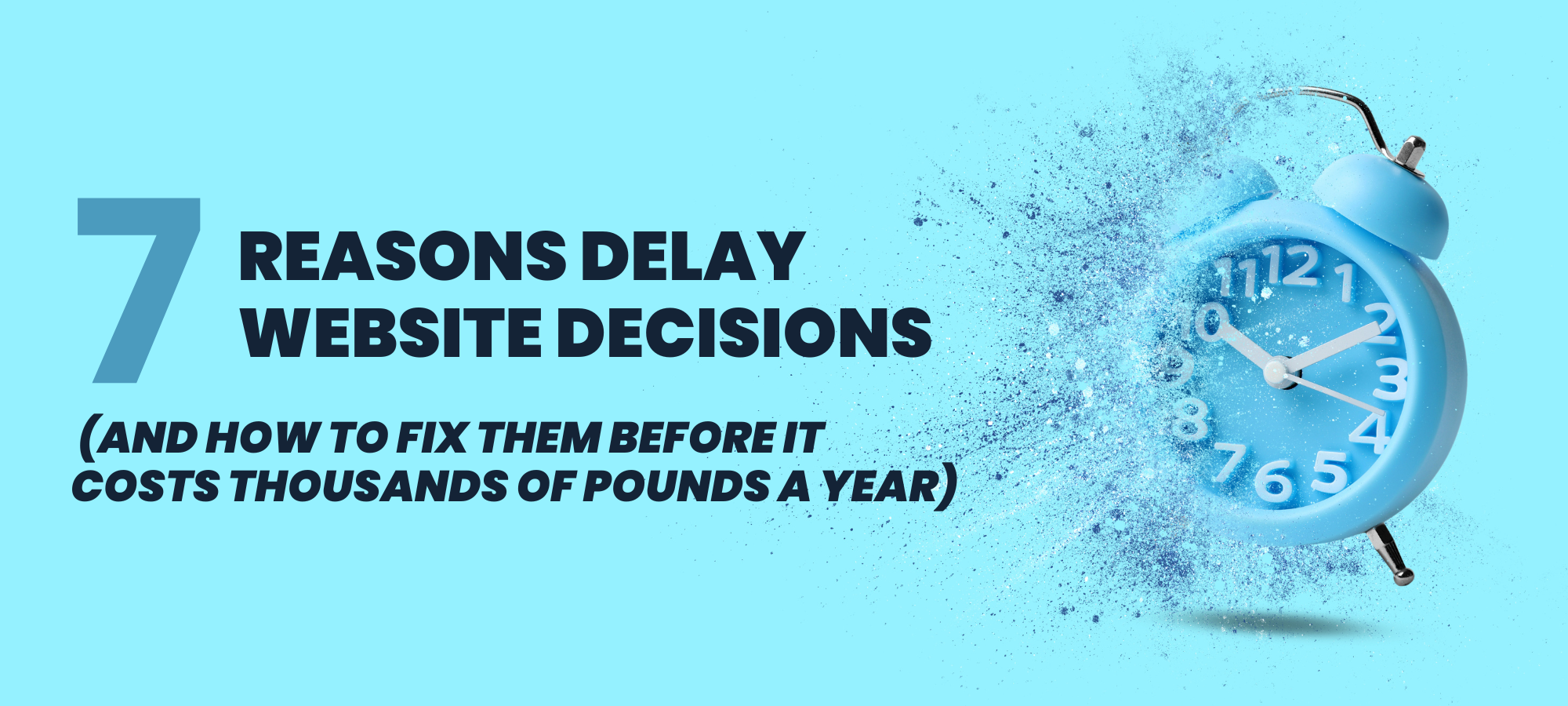
If your website still isn’t producing predictable enquiries, the issue may not be strategy or budget: it’s indecision. Here are seven reasons firms delay website projects, and how to fix them before the delay costs thousands of pounds a year in missed business.
1. “We Just Need to Think About It Longer”
Delaying feels responsible, but often it’s just expensive.
Every quarter without a functional, conversion-driven website means more prospects choosing competitors who look and communicate better online.
Fix:
Set a decision deadline. Ask: “If we wait another three months, what will it cost in missed enquiries, proposals, or billable work?”
2. “It Feels Expensive Right Now”
Many firms view a website as a cost, not an investment.
But one new retained client or contract often pays for the entire project.
Fix:
Shift focus from price to return on investment. A well-built site generates qualified leads, builds authority, and reduces time wasted on unfit enquiries.
Related: [How Much Should a Professional Services Website Cost in the UK?]
3. “We’ve Been Burned by Agencies Before”
Plenty of agencies promise results, deliver designs, and disappear.
That’s why trust and transparency should matter more than aesthetics.
Fix:
Ask for evidence, not promises. Review case studies, confirm who owns your assets, and request visibility into timelines, results, and reporting before signing.
4. “We’ll Wait Until Things Pick Up”
This mindset traps firms in feast-or-famine cycles.
Busy seasons fund quiet ones, but growth only happens when marketing runs consistently behind the scenes.
Fix:
Start now, even with small improvements. Predictable enquiry flow happens when you build visibility before you need it.
5. “I’ll Just Get One More Quote”
Comparing providers is smart, but not all proposals are equal.
Many cheaper options skip the strategy and tracking that make a website actually perform.
Fix:
Compare deliverables, not designs. Ask:
“How will this website generate measurable enquiries or leads?”
If the answer isn’t clear, the quote probably isn’t either.
Related: [21 Questions to Ask Before You Hire a Web Designer for Your Professional Firm]
6. “We’re Not Ready for a Big Change”
It’s easy to feel overwhelmed by the idea of a full rebuild, especially when your team’s already busy.
But with the right process, most of the heavy lifting should be handled for you.
Fix:
Choose a partner who provides clear milestones, feedback loops, and content support so your time commitment stays low and the process feels simple.
7. “We Need Partner Approval First”
Consensus is slow, but inaction is slower.
For every month a project stalls, competitors gain more search visibility and credibility.
Fix:
Use data to drive decisions.
Show how inaction costs: for example, missing just one ideal client per week worth £1,000 in fees adds up to over £50,000 a year in unrealised revenue.
Final Thoughts
Hesitation feels safe, but it’s often the most expensive decision of all.
Your website is no longer a digital brochure; it’s your most powerful client-generation tool.
Whether you handle it in-house or with an agency, the key is to decide quickly, measure outcomes, and view the website as a growth asset, not a side project.
The firms that act decisively will always outperform those that “wait until things settle.”