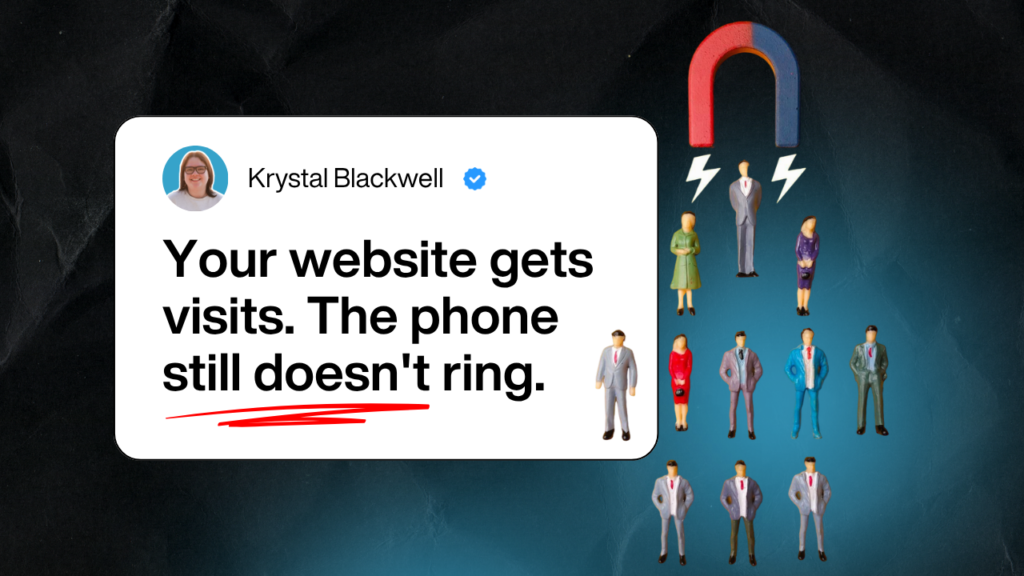
You’re paying for marketing every month. Someone sends you a report full of numbers. So why does the phone stay quiet, and why does the inbox look the same as it did last year?
Maybe you’ve started to wonder whether marketing works for a firm like yours at all. Or whether you’re with the wrong agency, on the wrong platform, or spending in the wrong place.
By the end of this article, you’ll know the five places marketing usually breaks down before it becomes an enquiry. You’ll also know how to work out which one is yours.
We’ll start with tracking, because you can’t fix what you can’t see. Then we’ll follow a potential client from first seeing your marketing to getting a reply from you.
Key takeaways
- If enquiries aren’t tracked by source, you can’t tell which marketing is working.
- Marketing can reach plenty of people and still reach the wrong ones.
- Many enquiries are lost after the click, on the page or in the follow-up.
- More spend rarely fixes a problem further down the line.
- Find the weakest point first, then fix that one thing.
In this article
- You may not be able to see which marketing works
- Your marketing may be reaching the wrong people
- The right people see it, but the message doesn’t land
- They’re interested, but the next step is hard
- They get in touch, but the reply is slow or missing
- Expectations, time and testing
You may not be able to see which marketing works
The first question is simple. Do you know where your last ten enquiries came from? If the honest answer is “not really”, that’s the first thing to fix. Without it, every decision about your marketing is a guess.
Many reports show clicks, impressions and followers. Those numbers can go up while enquiries stay flat. They tell you people saw something. They don’t tell you anyone got in touch.
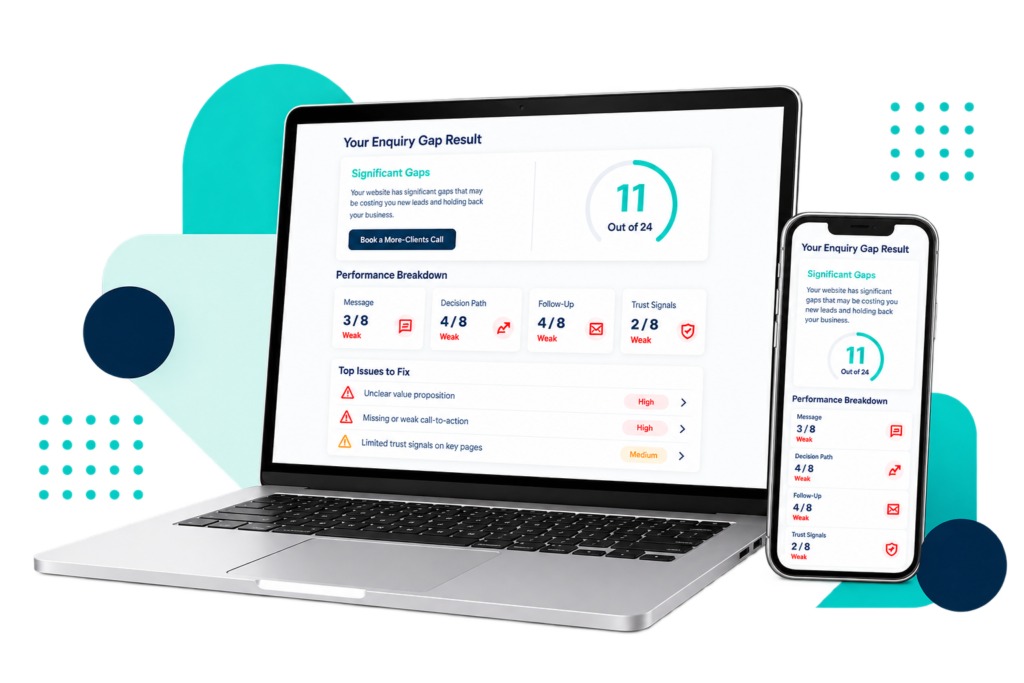
Good tracking counts the things that matter to a service firm. That means form enquiries, phone calls from the website and booked calls, each linked to where the person came from.
If your current report doesn’t show that, ask for it. Our article on what a website company should report after launch explains what to ask for.
Your marketing may be reaching the wrong people
Sometimes marketing works well at reaching people. But they aren’t the people who buy from you. An advert aimed at a wide area, or at broad search terms, can bring lots of clicks from people looking for something else. You pay for every one.
The same thing happens with content. An article can rank well and bring in visitors who want free advice rather than a firm to hire.
The check here is to look at the enquiries you do get. Are they the kind of work you want? If not, the targeting or the message needs tightening before you spend more.
The right people see it, but the message doesn’t land
Imagine the right person lands on your page. They have a problem you solve. Do they understand, in a few seconds, that you can help with it?
In our experience, this is where a lot of marketing comes unstuck. The advert promises one thing and the page talks about something else.
Or the page talks about the firm, its history and its values, before it says what it does for the reader.
A quick test is to show your page to someone outside the business for five seconds. Then ask them what you do and who you help. If they can’t say, the message needs work.
They’re interested, but the next step is hard
Now the visitor wants to get in touch. How easy have you made that? Look for a phone number that’s hard to find, or a form with lots of boxes. Look for buttons that say “learn more” and lead nowhere useful.
Each one is a small reason to stop. Together, they can lose you a good share of the people your marketing worked hard to bring. This is also why a page can rank on page one and still bring in no calls. We explain that pattern in more detail in a separate article.
The fix is usually one clear next step on every page, repeated near the top and further down. Make the phone number tappable on phones, and keep the form short.
They get in touch, but the reply is slow or missing
This is the one most firms don’t like to look at. An enquiry arrives, and then what happens? If the form goes to a shared inbox, everyone may think someone else has replied. If replies take a day or two, the person may have already spoken to another firm.
Automation can help here, but only if it’s set up well. An instant confirmation email, a reminder for your team and a short follow-up sequence can stop enquiries slipping through.
The common mistakes with automation are messy contact lists, one message for everyone and nobody checking the results.
Start with the basics. Who owns new enquiries? How fast do they reply? What happens if someone doesn’t answer the first time?
Expectations, time and testing
Sometimes the marketing is fine, but the expectations aren’t. Search work can take months to build. Paid ads need time and testing to find what works.
It helps to agree what “working” looks like at each stage. In month one, that might be clean tracking and the right people clicking. Later, it’s enquiries and clients.
Testing matters too. Small changes to a headline, a button or a form can change how many people get in touch. Test one thing at a time, so you know what made the difference.
And give each test long enough. A week of results is rarely enough to judge a change for a service firm.
What this looked like for one client
One of our clients is a UK business on our monthly marketing plan. It gets 70+ website enquiries every month (between 63 and 92 a month, April to September 2026).
We can quote that range because the enquiries are counted every month. That’s why tracking comes first.
Find the weakest point first
When marketing isn’t bringing in enquiries, it’s tempting to change everything at once. A new agency, a new website, a new platform.
It usually works better to follow one potential client all the way through. From the advert or search, to the page, to the form, to your reply.
Somewhere along that path, people are dropping out. Find that point, fix it and then look again.
If you’d like help finding where your enquiries are getting lost, book a More Clients Call. It takes under 30 minutes, and you’ll leave knowing what to check first.
Not ready for a call? Read how to get people to find and use your website.